MADAGASCAR
On arrival at Caterham, we received our mobilization stores and sent away for replacement vehicles and special stores. Keep maximum nos. away on leave or being inoculated with the many inoculations for what seemed any part of the world. Everyone was kitted out for the East with 1901 pattern suit, helmets and tropical kit, so there was no time for anyone to wonder why or what! On top of it all, nothing had to be missed and this was ensured by the endless returns and threats of death to the second-in-command and CM. During this time, we had the usual vehicles left with water in their radiators, which froze up and cracked the cylinder blocks, but eventually after many hectic days the Unit was once more re-assembled and re-equipped.
Just prior to our embarkation. Major Wise was declared unfit for foreign service and was replaced by Capt. Machin, the Divisional Adj. who assumed command of the unit. The vehicles were taken to Cardiff for embarkation and members of the M.T. Party then proceeded to meet the main body in Liverpool, where the whole unit embarked on the Oransay. The Second-in-Command travelled on the Duchess of Athol as an instructor to Brigade Head Quarters and the Northamptonshire Regiment. The various forms of vigorous training and exercises were undertaken during the voyage out, but as the ships were still on a peacetime footing an excellent time was had, especially by the Officers.
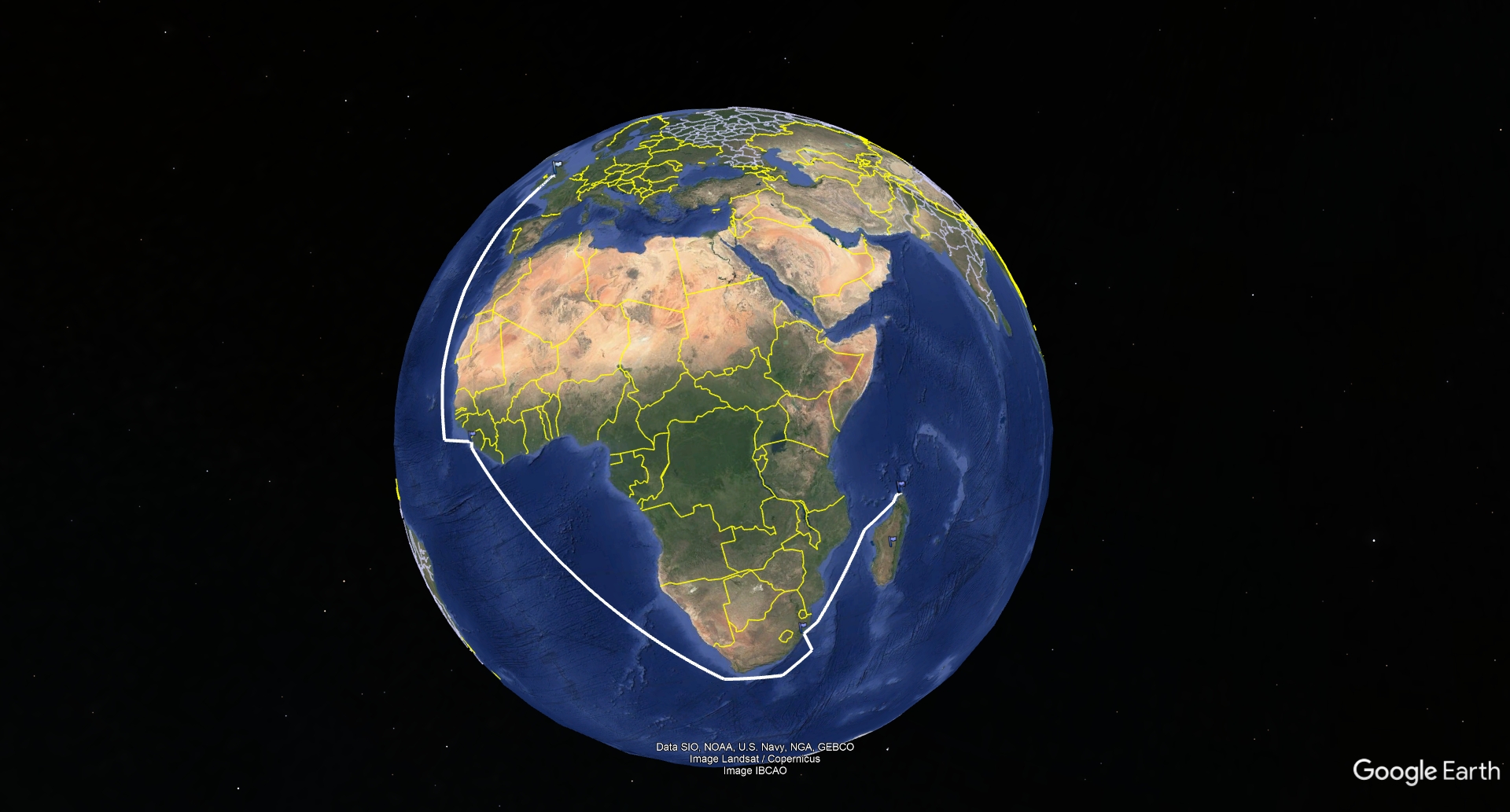
We were accompanied by the Battleship Malaya, the Aircraft Carriers Illustrious and Hermes, six fleet destroyers and several other warships, including an anti-aircraft ship together with 40 odd vessels which comprised the last convoy. We arrived at Freetown and I received a message to report to my CO. immediately. After we left Freetown, I was informed that we were going to take part in a landing operation against the Island of Madagascar. We were to be the reserve brigade and had to do all the necessary planning so that when we arrived at Durban, we would be able to re-ship all our equipment in the order in which we required it to come off the vessels and to work out loading tables for our men and equipment for the assault landing craft, L.C.M. and other craft which would take our Unit ashore. This was worked out whilst passing through the tropics and we worked extremely hard getting up the necessary loading and landing tables and preparing for the new adventure.
The men kept fit by the usual walking around the decks with equipment and boots and "lectured on those subjects which would be of use to them but not give the game away." On arrival for our five days stay in Durban we were immediately despatched on extensive route marches to ensure that we would be able to march at least twenty miles when we arrived at our destination. At the same time we arranged with the various cargo boats to reload our equipment and provided crane drivers and loading parties to help with the work. Despite the short notice we had, all was as ready could be for the date of our departure and we well remember the good lady of Durban who sang to the departing ships as we left the harbour, together with the pipe bands of the Seaforth Highlanders and the Royal Scots Fusiliers playing from the sterns of their respective ships
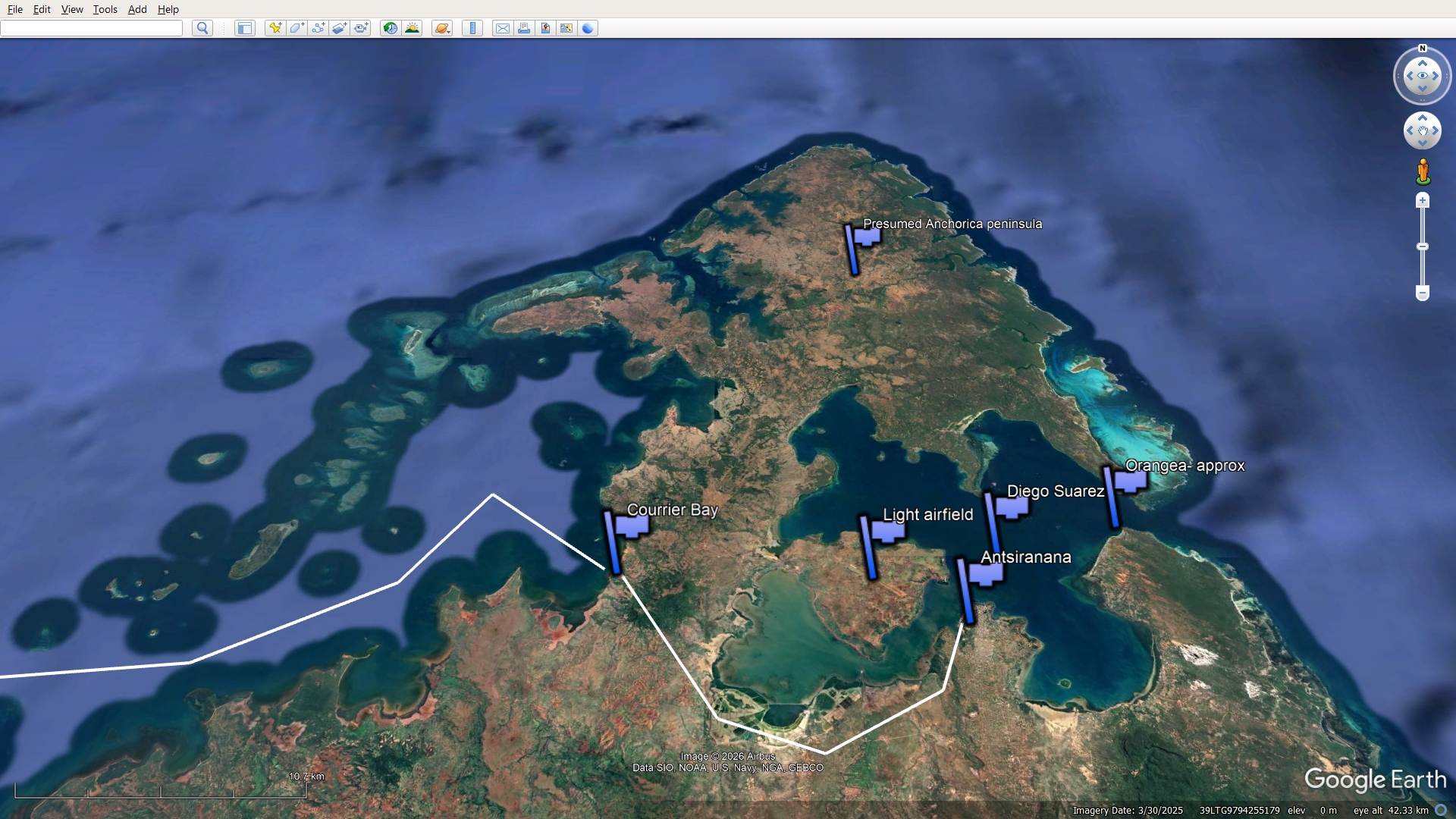
Immediately we left we were told exactly where we were going, but I rather felt that far too many people knew already. We were to be the support Brigade and followed close on the heels of the Commando Brigade who made the initial landing. We eventually arrived off Courrier Bay and that night in our landing crafts assault, set off for Blue Beach which was the landing point and this was due east of our boat which was anchored out in the bay beyond the enemy Mine Fields which were laid between the ships in the bay and the shore. After travelling a couple of hours in our assault boat we noticed that she was heading due south and on asking the Coxswain did he know where he was going, he replied "yes", but after a further quarter of an hours travelling due south it was obvious that he was completely lost so we told him to turn sharply "left" and head for a large hill in the distance called Windsor Castle and we hoped to pick up the landing lights on Blue Beach as we neared the shore.
By the grace of God, we missed large reefs and several other obstacles and eventually landed on the shore. Through soft, deep sand we staggered over the beach with all our assault equipment and met our Commanding Officer who took us to the Unit Assembly Area and later we set off along the track towards Port Antsiranana. We marched through the night and all the following day with endless halts and little information and needless to say the heat took its toll of many despite our training. That night we halted off the road just outside Antsiranana prior to putting in an attack in which we were to check the road and also provide an assault party for some pill boxes. All members of the Unit had been supplied with Mosquito cream and six tablets of quinine for the landing but the tablets were dissolved in the water as we waded ashore and the Mosquitoes feasted in the cream and us, so by morning we were a badly bitten lot of troops.
During the night we received orders for the Seaforth and the Northamptonshire to continue the advance on either side of the road and they attacked the last remaining forts and anti-tank ditches defending the main road into the town. We had only one tank left by this time and there was some fierce fighting before the forts were finally captured and the road cleared; then we moved on into the town to find that a Commando Unit had been landed from a destroyer in the harbour and between the two attacks, the French capitulated and by morning all was in our hands.
The 17th Brigade moved out of Fort Antsiranana by the coast road to the Anchorica Peninsula. This road was completely dominated by high mountains on the right with the road running along the beach. On the mountains were many machine gun and anti-tank gun posts manned by the Senegalese Native Troops who were fine troops with tremendous guts. Luckily their French Masters were not willing to continue the battle and we were able to move forward without any casualties for which we were extremely grateful.
Our first job was to clear a large ammunition dump of booby traps and demolition devices with which the French had hoped to blow it up before falling into our hands. This we did and our training the previous years had stood us in good stead. We took up our Unit Position at a point called Orangea in some school rooms on the top of the cliffs. The days were extremely hot and the nights were cool and invigorating and as the sea was all around us, it was not too bad. The Brigade’s task was to clear the Peninsula of all French and native troops together with local natives and get it into a state of defence to ensure that the harbour of Diego Suarez could not be utilised by the Japanese, whose intention it was to capture it in the near future and use it for their fleet.
Our first task was to set up waterpoints to ensure that we had all we required in the Orange Peninsula. Others were the removal of French ammo. dumps which were suspected of being prepared for demolition, the adaption of their gun positions, where possible, the laying of a live mine field both anti-personnel and anti-tank on our Southern front, construction and improvement of roads and tracks, gun positions etc., command posts were constructed and the usual assistance was given to the three Battalions who also had locally defended areas inside the Brigade area. A small landing field was cleared to enable the light planes to land on the Peninsula, as the main airfield was at Antsirabe much further South.
Whilst constructing the waterpoint, it was found that the timber for the grillage was so hard that none of our nails or drills would penetrate it and the only means of connecting it together was eventually found to be using .300 rifles, shooting a hole where we required the nail to go, then following it up with large 6" or 8" spikes. The most impressive waterpoint was eventually completed here with shower bath and washing points; all the various French military encampments, fort and ammunition depots had now to be checked and cleared and either rendered useless or turned to our own advantage for use with our own equipment. Long before our work was complete the Japanese sent in two midget submarines and torpedoed the Battleship Ramillies and sank a fleet tanker with other minor damages. This caused tremendous excitement in the fleet but no one knew what was happening - ships fired and destroyers loosed off with depth charges, all round the area. This was too much for the Jap Subs and they beached themselves on the north shore of the harbour and made off into the hills. Our commandos set off after them but the Japs committed suicide before we could stop them. Needless to say we stood to all through the night and were very much on the alert for the next few days.
On the night of the Japanese attack I was called to the hospital where our O.C. Major Machin was seriously ill with M.T. Malaria, which was caught on the night of our landing when we rested in the swampy country before Antsiranana. Many members of the brigade had caught this malaria; some of it was malignant and in his case, where he already had blackwater fever whilst on the West Coast of Africa during the ? landings engineering trip to that coast he succumbed and died. He was buried the following day in a section of the cemetery at Antsiranana which was set aside for military use. I took over command of the Unit with the approval of Brigade Commander, Brigadier Tarleton. I carried on with my predecessor's work making the battalion's positions proof against the various types of attack. We went as far as the engineer resources allowed. Naturally, we had many improvised jobs to do, but all trades in the establishment were fully employed from lighting the Brigadier's headquarters down to digging holes to receive mines in the minefields on the Southern front.
Towards the end of June, we were informed that we were to re-join our Division in India. At the end of June, we re-embarked on HMS Karanga and sailed for Bombay.